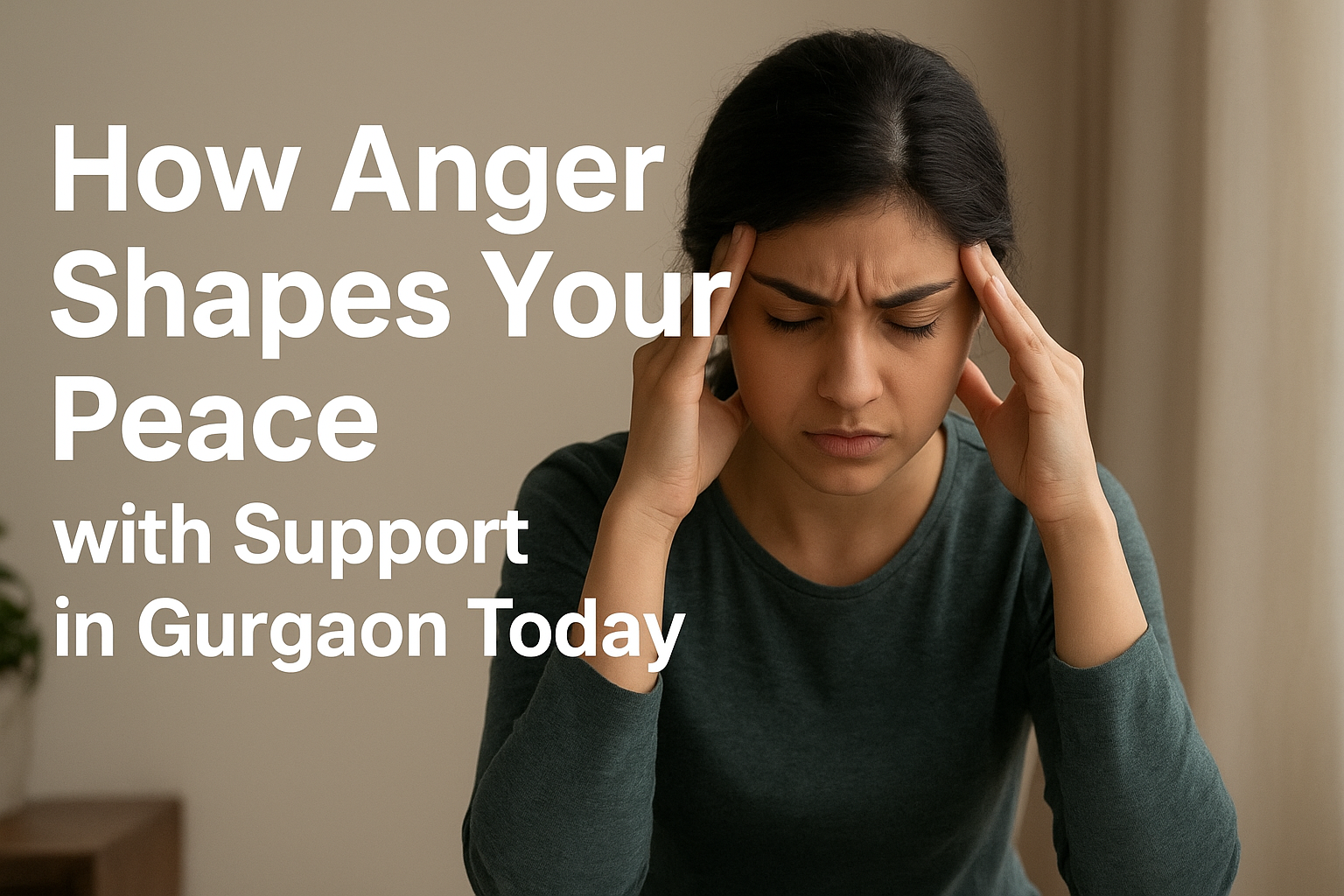
How Anger Shapes Your Peace with Support in Gurgaon Today
Anger doesn’t always arrive loudly. Sometimes it begins as a small discomfort you brush aside, a tightness you ignore, or a thought you avoid. Over time, these small moments pile up and start shaping how you think, respond, and connect with people around you. In a fast-moving place like Gurgaon—where pressure, deadlines, and responsibilities never seem to slow down—this emotional buildup becomes even more common. That’s why early support from trained professionals, like expert therapists in Gurgaon, can make such a meaningful difference in helping you regain balance and understand your emotions better.
Anger Isn’t Just “Getting Upset” — It’s a Message
Most people think anger is just about shouting or losing control, but the truth is deeper.
Anger is often a sign that:
1. Something feels unfair
2. A boundary has been crossed
3. You feel unheard
4. You’re emotionally tired
You’re overwhelmed but don’t know how to say it
When anger is understood as a message instead of a problem, it becomes much easier to manage. It stops being something you fear and becomes something you can learn from.
How Anger Changes Your Thought Patterns
Before anger shows up in your actions, it affects how you think.
In that emotional moment, your brain becomes defensive, your patience shrinks, and your ability to be objective gets reduced.
You might notice yourself:
1. Assuming the worst
2. Misreading someone’s intentions
3. Overreacting to minor issues
4. Feeling personally attacked
5. Going into “fight mode”
This shift doesn’t mean you’re a bad person — it means your brain is trying to protect you, even if the danger isn’t real.
Anger Builds Quietly Before It Breaks Out
Anger rarely appears out of nowhere. It comes from emotional overload.
Maybe you’ve been:
1. Carrying stress for weeks
2. Managing too many responsibilities
3. Facing conflict at home
4. Feeling unappreciated at work
5. Ignoring your own needs
By the time you notice the anger, you’re already at emotional capacity. Understanding this buildup helps you slow down before the emotion gets too strong.
How Anger Creates Emotional Distance in Your Relationships
One of the hardest parts of anger is the impact it has on people you love. Even when you don’t mean to, anger can push people away.
1. Conversations Turn Into Clashes
You stop listening. They stop listening.
Arguments become more about “winning” than solving.
2. Trust Gets Shaken
Frequent anger makes others feel unsafe opening up to you.
3. Emotional Safety Fades
People start thinking twice before sharing something important.
4. Avoidance Becomes Common
Instead of resolving issues, both sides avoid them — creating even more distance.
Anger doesn’t ruin relationships overnight; it chips away at them slowly.
Awareness: The First Step Toward Peace
You gain real control over anger when you start noticing what fuels it.
Awareness makes you pause, reflect, and respond instead of reacting instantly.
Some helpful questions to ask yourself:
“What exactly triggered me?”
“What was I feeling before I got angry?”
“Did something else happen earlier that added to this?”
“What part of this situation feels personal to me?”
Honest answers can change the way you see yourself and your reactions.
How Your Body Warns You Before Anger Takes Over
Your body speaks before your words do.
The signs are often subtle:
1. Shoulders tightening
2. Faster heartbeat
3. Warm face or ears
4. Quick breathing
5. Hands clenching
6. Restlessness
These signals are like early alarms. If you catch them in time, you can step back before things escalate.
Why Stress Makes Anger Feel Bigger
Gurgaon’s lifestyle is intense — long hours, heavy workloads, fast decisions, constant communication.
When stress builds without relief, even small things feel explosive.
Stress causes:
1. Lower patience
2. Higher irritability
3. More overthinking
4. Emotional exhaustion
5. Difficulty staying calm
Reducing stress doesn’t eliminate anger, but it makes anger far easier to understand and control.
Why Suppressing Anger Is More Harmful Than Expressing It
A lot of people think staying quiet is better than getting angry — but silence often creates deeper frustration.
Healthy expression is the key.
It looks like:
1. Taking a moment before reacting
2. Speaking clearly instead of harshly
3. Owning your feelings instead of blaming
4. Setting boundaries calmly
5. Taking breaks when things get overwhelming
6. Healthy expression protects both you and your relationships.
7. Small Tools That Can Make a Big Difference
You don’t need something complicated to feel emotionally better.
Simple, consistent habits work wonders.
1. Take a Pau
A few seconds can prevent a reaction you might regret.
2. Breathe Slowly
Breathing resets your nervous system instantly.
3. Reframe Your Thoughts
Ask yourself: “Is this the only way to see the situation?”
4. Move Your Body
A quick walk, stretching, or even drinking water helps your mind loosen up.
5. Communicate After You Calm Down
You think more clearly when you're not overwhelmed.
6. Respect Your Boundaries
Saying “I need a moment” can save relationships.
Consistency matters more than perfection.
Why Local Understanding Helps in Gurgaon
Everyone experiences anger, but the stress triggers in Gurgaon are unique:
Fast corporate culture
Long commutes
High expectations
Social pressure
Work-life imbalance
When your environment is intense, having support that understands your daily reality becomes incredibly helpful. It feels relatable and actionable, not theoretical.
Why Professional Support Makes a Real Difference
Sometimes, despite trying your best, anger keeps repeating the same patterns.
This doesn’t mean something is wrong with you — it simply means you need clarity from outside the situation.
Professional support helps you:
1. See your blind spots
2. Understand deeper emotional triggers
3. Break long-standing cycles
4. Communicate more effectively
5. Create healthier emotional habits
6. Feel safe while exploring difficult feelings
7. It’s less about “fixing” and more about understanding.
8. Moving Toward Peace — One Step at a Time
Peace doesn’t come from eliminating anger; it comes from learning how to navigate it.
Over time:
1. Your reactions soften
2. Your emotional awareness grows
3. Your relationships get healthier
4. You understand yourself better
5. Stress begins to feel manageable
6. Calmness becomes more natural
7. Every small shift brings you closer to emotional freedom.
Final Thoughts
Taking the first step toward understanding your anger is far more powerful than you may realize. It opens the door to clarity, healthier boundaries, and meaningful change. When self-awareness meets the right guidance, anger becomes a teacher instead of a burden. And in this journey, structured, compassionate support such as anger management therapy in Gurgaon can help you reconnect with yourself, rebuild your peace, and move toward a calmer, more intentional life.